As I sit in the airport and begin to worry about losing the things that I have so loved about this country, it surprises me once again.
The man playing traditional harp in a full suit noticed a backpacker passing with a banjo on his backpack. He stopped mid-song and tried to ask him about it. In broken spanish/portuguese/english, the two switched instruments and tried to play a song together. The guard in aviator sunglasses watched, and the woman selling chipa gave them both a free piece for their efforts.
Amazing.
February 14, 2012
Heading Out
Twenty-four hours from now I will be home. My Peace Corps service will be over; 2.5 years complete, and Paraguay will begin shifting from reality to memory.
Its not the way I wanted to end my service. With and unsolved stomach mystery, a useless month of medical exams, and many weeks of uncertainty. But while not ideal, the time was right. With weeks of uncertainty and waiting, I had time to think, to process, and to prepare for the end of what has truly been an incredible Peace Corps Service.
When I applied to Peace Corps, I sincerely hoped for any country but Paraguay. Yet ironically, that is exactly where I ended up. Two days after I swore in as a G-31 beekeeping volunteer for Paraguay, I developed a severe bee allergy, had to switch sectors without additional training, and began waiting for a site all over again. But despite the ironies and hard times, on January 8th, 2010, I moved to Caroveni Nuevo/Cocuere Guazu. Though it wasn't what I thought I wanted, there I ended up was exactly where I needed to be for the past 2.5 years.
I wish this was a post about the Peace Corps, but while I met many amazing people in the Peace Corps, had some wonderful bosses and mentors, and learned a lot in their trainings, the Peace Corps did not define my time here. Instead, it was Paraguay. The cultural quirks, the incredible landscape, and most of all the people of Paraguay turned a foreign land into a comfortable home for the last 2.5 years.
Summing up this experience would be impossible. I know in four short days I will resort to a simple, "It was incredible" when questioned about my service. But inside I will smile, and remember the amazing-ness that is Paraguay. The countryside, the people who are willing to share anything/everything, the calmness and constant lack of rush, the willingness to try new things, the many gloriously plain afternoons spent reading in a hammock under a grove of mango trees, and finally, my fellow volunteers, who I know will mirror my smirks at the same memories.
As I left my site for the last time a few days ago, I was surprised when the bus stopped in front of my friend's house. Soon she marched on, told the driver to wait, and without talking to anyone else, walked straight to the back of the bus, handed me a platic bag wrapped around an undetermined amount of money and said, "this is for your chipa, my daughter. I love you and will miss you. Good luck." She kissed my cheeks, thanked the driver and told him he could go again.
I came to Paraguay with two families (my own, and my college family), and I leave with another 4 or so. The goodbye’s have been hard, with random swings of sadness, excitement, fear, and more, but I breathe a little easier when I realize that inside, I know I’ll be back. When? How? Who knows? But I’ll be back Paraguay. It’s the end of Peace Corps, but its not the end. Jajotopata.
Its not the way I wanted to end my service. With and unsolved stomach mystery, a useless month of medical exams, and many weeks of uncertainty. But while not ideal, the time was right. With weeks of uncertainty and waiting, I had time to think, to process, and to prepare for the end of what has truly been an incredible Peace Corps Service.
When I applied to Peace Corps, I sincerely hoped for any country but Paraguay. Yet ironically, that is exactly where I ended up. Two days after I swore in as a G-31 beekeeping volunteer for Paraguay, I developed a severe bee allergy, had to switch sectors without additional training, and began waiting for a site all over again. But despite the ironies and hard times, on January 8th, 2010, I moved to Caroveni Nuevo/Cocuere Guazu. Though it wasn't what I thought I wanted, there I ended up was exactly where I needed to be for the past 2.5 years.
I wish this was a post about the Peace Corps, but while I met many amazing people in the Peace Corps, had some wonderful bosses and mentors, and learned a lot in their trainings, the Peace Corps did not define my time here. Instead, it was Paraguay. The cultural quirks, the incredible landscape, and most of all the people of Paraguay turned a foreign land into a comfortable home for the last 2.5 years.
Summing up this experience would be impossible. I know in four short days I will resort to a simple, "It was incredible" when questioned about my service. But inside I will smile, and remember the amazing-ness that is Paraguay. The countryside, the people who are willing to share anything/everything, the calmness and constant lack of rush, the willingness to try new things, the many gloriously plain afternoons spent reading in a hammock under a grove of mango trees, and finally, my fellow volunteers, who I know will mirror my smirks at the same memories.
As I left my site for the last time a few days ago, I was surprised when the bus stopped in front of my friend's house. Soon she marched on, told the driver to wait, and without talking to anyone else, walked straight to the back of the bus, handed me a platic bag wrapped around an undetermined amount of money and said, "this is for your chipa, my daughter. I love you and will miss you. Good luck." She kissed my cheeks, thanked the driver and told him he could go again.
I came to Paraguay with two families (my own, and my college family), and I leave with another 4 or so. The goodbye’s have been hard, with random swings of sadness, excitement, fear, and more, but I breathe a little easier when I realize that inside, I know I’ll be back. When? How? Who knows? But I’ll be back Paraguay. It’s the end of Peace Corps, but its not the end. Jajotopata.
December 19, 2011


August 20, 2011
Almost there,,
Wow! From 27 months of service down to 4! Everyone said that the second year went faster… they were not lying. I think it’s the comfort element. I am comfortable here (barring the occasional tarantula invasion), and the Paraguayans in my community are comfortable with me. The result is a sort of normalcy that makes days pass quickly, and a new appreciation for the oddities that have woven themselves into my life over the past almost-2 years.
I was drinking terere at my neighbors house the other day, and it was business as usual. Then suddenly, the neighbor said, “let’s do it,” and stood up and walked toward the trunk of his truck. Before I knew it all the men were involved in lifting a baby bull from the trunk back and slapping it to see if it would stand. Then of course, since I was the tecnica, I was asked to inspect the bull and tell them if I thought it would live. Since it was only skinny, and seemed to have energy, good skin, and healthy feces, I said that with the right vitamins and plenty to eat it should be fine. Then we watched it take a nap as we finished our terere.
It wasn’t until later that night that I even thought about the ridiculousness of the situation. First off why did nobody mention the calf to me until they were dragging it out of the back of the truck? And second, why was I suddenly the local vet? I have never demonstrated any capacity or knowledge about animal health, yet everyone, myself included, played along with my new role just fine.
Along with comfort has come a new demand of my skills. As I cuddled into my blanket ready for a relaxing afternoon of reading this week, my friend pulled up on her motorcycle and said “come to my house in 15 minutes, I need to learn how to make a cake for this afternoon. Oh, and bring your cake pans, I don’t have any. See you soon!” So I trudged down the street and spent the afternoon making a cake for (by together she meant that she would watch) my friend’s daughter. Suddenly I realized I barely had enough time to make it home before the sun disappeared.
I’ve finally adjusted. I am no longer shocked by Paraguay. Paraguayans are no longer shocked when I don’t want to eat cow stomach. My community and I have found our equilibrium.
And so, I stopped writing my blog. But I have stories I have been collecting, and before I forget I will start posting them again. Because while the shock value has faded, the incredible nature of my life has not, and its all because of this country, Paraguay. The “guay” that nobody really knows anything about. But it’s a country with a traditional culture full of fun quirks, a pretty good soccer team, and almost oddly unwavering pride.
So as my work in site begins to come to a close, I’ll turn to goal 3 of the Peace Corps: Sharing Paraguayan culture with the states. I’ll begin with some photos:


I was drinking terere at my neighbors house the other day, and it was business as usual. Then suddenly, the neighbor said, “let’s do it,” and stood up and walked toward the trunk of his truck. Before I knew it all the men were involved in lifting a baby bull from the trunk back and slapping it to see if it would stand. Then of course, since I was the tecnica, I was asked to inspect the bull and tell them if I thought it would live. Since it was only skinny, and seemed to have energy, good skin, and healthy feces, I said that with the right vitamins and plenty to eat it should be fine. Then we watched it take a nap as we finished our terere.
It wasn’t until later that night that I even thought about the ridiculousness of the situation. First off why did nobody mention the calf to me until they were dragging it out of the back of the truck? And second, why was I suddenly the local vet? I have never demonstrated any capacity or knowledge about animal health, yet everyone, myself included, played along with my new role just fine.
Along with comfort has come a new demand of my skills. As I cuddled into my blanket ready for a relaxing afternoon of reading this week, my friend pulled up on her motorcycle and said “come to my house in 15 minutes, I need to learn how to make a cake for this afternoon. Oh, and bring your cake pans, I don’t have any. See you soon!” So I trudged down the street and spent the afternoon making a cake for (by together she meant that she would watch) my friend’s daughter. Suddenly I realized I barely had enough time to make it home before the sun disappeared.
I’ve finally adjusted. I am no longer shocked by Paraguay. Paraguayans are no longer shocked when I don’t want to eat cow stomach. My community and I have found our equilibrium.
And so, I stopped writing my blog. But I have stories I have been collecting, and before I forget I will start posting them again. Because while the shock value has faded, the incredible nature of my life has not, and its all because of this country, Paraguay. The “guay” that nobody really knows anything about. But it’s a country with a traditional culture full of fun quirks, a pretty good soccer team, and almost oddly unwavering pride.
So as my work in site begins to come to a close, I’ll turn to goal 3 of the Peace Corps: Sharing Paraguayan culture with the states. I’ll begin with some photos:


January 7, 2011
Fantastically Normal
When living in the country-side of Paraguay, my life becomes the countryside of Paraguay.
When I have nothing to do, I can now sit for hours and simply appreciate life. When I look for excitement, I cross the street anxiously to my neighbors house to hold her baby and gossip about how rude the senora down the road acts in committee meetings, and watch the road for new traffic. When I look for natural beauty, I sit on the porch as the sun sets below the palms. When I thought about New Years resolutions for 2011, they all involved my site; from getting to know new family’s, making my garden more environmentally friendly, and finally trying some sort of tongue. For all intents and purposes. My life in this town.
And oftentimes last year this fact began to bother me. I did not want to be that small-minded, that small-town, or that potentially ignorant to the parts of the world that existed far away from our daily happening. Which is why when Christmas vacation time came around, I was anxious to re-discover the world, or at least parts of Argentina.
And discovering I did. First San Carlos de Bariloche, where nature’s wonders continually surpassed my minds predisposed notions of beauty and shocked my system’s ability to handle extreme fluctuations of temperatures. Days were spent frolicking along snow-capped peaks lining a lake whose sheer size and fairly consistent whit-capped waves were reminiscent of the ocean.


After a delightful (and meat filled) parrilla dinner on Christmas eve, it was off to Mendoza, where dirt roads were actually maintained, mountains were even higher, wine flowed freely, sushi actually existed and was delicious, and even rainy days could not keep city life from happening.


It was a good vacation. Full of new experiences and so visually stimulating that I find my photos, although beautiful, disappointing in comparison. When I left for vacation I planned on a re-adjustment period in Asuncion, and worried it would not be enough time to be ready for site. And yet, despite myself, after so much discovery, fun, excitement, newness… etc, upon arrival at the hotel in Asuncion, I was antsy to get home.
Finally, I made it back. And the first thing I did was cross the street to hold my neighbor’s baby, hear about the gossip I missed, and watch the sun cross below the palms with her. Instead of feeling small-minded or trapped this time, I felt happy. This is what we do in the Paraguayan countryside. This is the life I chose, or rather, the life that chose me, and which I accepted.
Vacation was amazing, wonderful, an experience that widened my perspective and inspired my future, but I think so did my hours of starting into the fields, chatting about the weather or neighbor’s bad behaviors, and sitting through black-outs in the countryside of Paraguay for the last year. So for 2011, I am going to embrace the amazing-ness that somehow develops despite a lack of incredible natural beauty, fairly temperate weather, unexciting social lives, and too much free time. Even though full of the traditionally unappreciated, the small-town life of my Paraguayan community provides me a plethora of wonders and surprises. I will be sure to keep you all posted about the un-incredible, yet amazingly intriguing, inspiring, and exciting happenings of life in the campo!
Its good to be home!
When I have nothing to do, I can now sit for hours and simply appreciate life. When I look for excitement, I cross the street anxiously to my neighbors house to hold her baby and gossip about how rude the senora down the road acts in committee meetings, and watch the road for new traffic. When I look for natural beauty, I sit on the porch as the sun sets below the palms. When I thought about New Years resolutions for 2011, they all involved my site; from getting to know new family’s, making my garden more environmentally friendly, and finally trying some sort of tongue. For all intents and purposes. My life in this town.
And oftentimes last year this fact began to bother me. I did not want to be that small-minded, that small-town, or that potentially ignorant to the parts of the world that existed far away from our daily happening. Which is why when Christmas vacation time came around, I was anxious to re-discover the world, or at least parts of Argentina.
And discovering I did. First San Carlos de Bariloche, where nature’s wonders continually surpassed my minds predisposed notions of beauty and shocked my system’s ability to handle extreme fluctuations of temperatures. Days were spent frolicking along snow-capped peaks lining a lake whose sheer size and fairly consistent whit-capped waves were reminiscent of the ocean.


After a delightful (and meat filled) parrilla dinner on Christmas eve, it was off to Mendoza, where dirt roads were actually maintained, mountains were even higher, wine flowed freely, sushi actually existed and was delicious, and even rainy days could not keep city life from happening.


It was a good vacation. Full of new experiences and so visually stimulating that I find my photos, although beautiful, disappointing in comparison. When I left for vacation I planned on a re-adjustment period in Asuncion, and worried it would not be enough time to be ready for site. And yet, despite myself, after so much discovery, fun, excitement, newness… etc, upon arrival at the hotel in Asuncion, I was antsy to get home.
Finally, I made it back. And the first thing I did was cross the street to hold my neighbor’s baby, hear about the gossip I missed, and watch the sun cross below the palms with her. Instead of feeling small-minded or trapped this time, I felt happy. This is what we do in the Paraguayan countryside. This is the life I chose, or rather, the life that chose me, and which I accepted.
Vacation was amazing, wonderful, an experience that widened my perspective and inspired my future, but I think so did my hours of starting into the fields, chatting about the weather or neighbor’s bad behaviors, and sitting through black-outs in the countryside of Paraguay for the last year. So for 2011, I am going to embrace the amazing-ness that somehow develops despite a lack of incredible natural beauty, fairly temperate weather, unexciting social lives, and too much free time. Even though full of the traditionally unappreciated, the small-town life of my Paraguayan community provides me a plethora of wonders and surprises. I will be sure to keep you all posted about the un-incredible, yet amazingly intriguing, inspiring, and exciting happenings of life in the campo!
Its good to be home!
December 8, 2010
The Chicken Project
My relationship with chickens in this country would be best defined as Love-Hate. I do love eating the home-grown chicken soup, and the beautiful orange-yolk eggs they sometimes lay in my compost pile. But I also do so hate those chickens that have figured out how to fly, and manage to clear my 3-foot tall garden fence and munch on all my red tomatoes, cabbages, and baby pepper plants before I realize what’s going on, as well as their sticky droppings they love to leave on my front porch.
And then, a few months ago, chickens became much more.
Almost every family in my community already has chickens. They are all over. They eat everything they can find, wander to far-off places, and when they decide to lay eggs, they do so wherever they see fit before climbing high into a mango tree to sleep for the night. But in July the agricultural committee randomly received 10 well-bred chicken babies sponsored by the mayor. I’m still unsure when the inspiration hit. It may have been the moment I saw those boxes of fluffy chicks being passed out to the agriculture committee. Or maybe when people started talking about how the chicks were dying. But I think it finally hit when one lady, chicken-less after only 4 weeks, recognized out-loud that she had no idea how to raise those chickens or why they died.
The committee had been hankering for a project, and after these chicken stories I couldn’t escape the opportunity glaring me in my face. I would teach my women how to care for their chickens. But they needed a reason. Other talks with them had established that beyond the winter-garden season where they could sell vegetables, they often lacked a steady income. Recent trips to the local store demonstrated that the local economy also lacked eggs. And so, it was born: the chicken project.
After watching to many easy projects fail in arriving, in their implementation, or in sustainability, I worked with all my resources to protect my project from a sad and unfortunate fate. Rules were born:
1) To be involved in the project, each woman had to be a long-standing and participatory member of the women’s committee.
2) Each person must attend a series of 4 talks about chickens in order to receive the project.
3) Each woman must contribute an equal percentage of crops from their fields towards the production of home-made chicken feed.
4) Each woman must work equally to raise the money for the community contribution.
5) Each woman must plant at least 5 lines of pigeon peas, a green manure, in their fields to go towards future chicken feed.
6) Each woman must have their chicken house built within a month of the materials arriving.
7) Each woman must keep at all times at least 6 chickens in her chicken coop.
At first things were hard. Despite constant reminders, good friends in the community tested my rules by skipping the first talk. When I had to kick them out of the project committee, I worried that everything would go downhill. I lost faith.

Slowly, faith returned. The 24 women that came to the first talk, came to the last 3 as well. When chicken-feed ingredients were requested, they took their time to make feasible promises that equaled what we needed. Women have already shown up at my house with contributions towards the chicken feed that may be months away in the making. And at every house I visit, something clicks in the minds of the women about mid-way through the visit, and they jump up excitedly to go show me their pigeon pea seedlings and show me where their chicken house will be built.
As of now we are waiting for the money. The application for a SPA grant through Peace Corps is in, thanks to great help from the president of the women’s committee, and hard days of cooking and selling chicken and empanadas has us only a few dollars away from our community contribution goal. And now we wait.
And now, though the chickens that get into my garden still piss me off, I see in them an opportunity. The ‘chicken chatter’ around town is positive, women are even putting some of the practices learned in talks to use with the chickens they have. The room underneath my guest bed is almost full of corn, beans, and coco waiting to be ground for future feed.
They did it. They followed the rules, and have astounded me with their progress. As I work to ensure that my part in the project pulls through as well, I notice that the women walk into meetings a little taller and laugh a little louder. Those garden destroying chickens have already begun to empower a capably group of people looking for a chance to prove themselves. And prove themselves they will continue to do, I tell them. Because though we may have to wait, when those chickens finally get here, are well fed and well kept, and start producing lots of eggs, I will be over at each of their houses to try one.
First came the chickens, then the eye-opening empowerment of the women, and now comes my time to learn patience in the funding process. We finally got confirmation of funding! But red-tape keeps its from materializing too soon. The day will come though, I hope, when its all about the eggs, and six months after, a few plates of home-made chicken soup as we watch baby chicks chirp away the beginning of the cycle.
And then, a few months ago, chickens became much more.
Almost every family in my community already has chickens. They are all over. They eat everything they can find, wander to far-off places, and when they decide to lay eggs, they do so wherever they see fit before climbing high into a mango tree to sleep for the night. But in July the agricultural committee randomly received 10 well-bred chicken babies sponsored by the mayor. I’m still unsure when the inspiration hit. It may have been the moment I saw those boxes of fluffy chicks being passed out to the agriculture committee. Or maybe when people started talking about how the chicks were dying. But I think it finally hit when one lady, chicken-less after only 4 weeks, recognized out-loud that she had no idea how to raise those chickens or why they died.
The committee had been hankering for a project, and after these chicken stories I couldn’t escape the opportunity glaring me in my face. I would teach my women how to care for their chickens. But they needed a reason. Other talks with them had established that beyond the winter-garden season where they could sell vegetables, they often lacked a steady income. Recent trips to the local store demonstrated that the local economy also lacked eggs. And so, it was born: the chicken project.
After watching to many easy projects fail in arriving, in their implementation, or in sustainability, I worked with all my resources to protect my project from a sad and unfortunate fate. Rules were born:
1) To be involved in the project, each woman had to be a long-standing and participatory member of the women’s committee.
2) Each person must attend a series of 4 talks about chickens in order to receive the project.
3) Each woman must contribute an equal percentage of crops from their fields towards the production of home-made chicken feed.
4) Each woman must work equally to raise the money for the community contribution.
5) Each woman must plant at least 5 lines of pigeon peas, a green manure, in their fields to go towards future chicken feed.
6) Each woman must have their chicken house built within a month of the materials arriving.
7) Each woman must keep at all times at least 6 chickens in her chicken coop.
At first things were hard. Despite constant reminders, good friends in the community tested my rules by skipping the first talk. When I had to kick them out of the project committee, I worried that everything would go downhill. I lost faith.

Slowly, faith returned. The 24 women that came to the first talk, came to the last 3 as well. When chicken-feed ingredients were requested, they took their time to make feasible promises that equaled what we needed. Women have already shown up at my house with contributions towards the chicken feed that may be months away in the making. And at every house I visit, something clicks in the minds of the women about mid-way through the visit, and they jump up excitedly to go show me their pigeon pea seedlings and show me where their chicken house will be built.
As of now we are waiting for the money. The application for a SPA grant through Peace Corps is in, thanks to great help from the president of the women’s committee, and hard days of cooking and selling chicken and empanadas has us only a few dollars away from our community contribution goal. And now we wait.
And now, though the chickens that get into my garden still piss me off, I see in them an opportunity. The ‘chicken chatter’ around town is positive, women are even putting some of the practices learned in talks to use with the chickens they have. The room underneath my guest bed is almost full of corn, beans, and coco waiting to be ground for future feed.
They did it. They followed the rules, and have astounded me with their progress. As I work to ensure that my part in the project pulls through as well, I notice that the women walk into meetings a little taller and laugh a little louder. Those garden destroying chickens have already begun to empower a capably group of people looking for a chance to prove themselves. And prove themselves they will continue to do, I tell them. Because though we may have to wait, when those chickens finally get here, are well fed and well kept, and start producing lots of eggs, I will be over at each of their houses to try one.
First came the chickens, then the eye-opening empowerment of the women, and now comes my time to learn patience in the funding process. We finally got confirmation of funding! But red-tape keeps its from materializing too soon. The day will come though, I hope, when its all about the eggs, and six months after, a few plates of home-made chicken soup as we watch baby chicks chirp away the beginning of the cycle.
November 21, 2010
Thanks for Coming
Sorry for the lack of blog posts recently.. internet in the countryside sometimes fails. Here is a little note I wrote to myself a while ago... I hope you enjoy! I'll do a photo update when I get to better internet!
From the first day I arrived in Paraguay, Peace Corps mentioned the importance of visiting families to get to know them. In training it was simple: I visited the families that the other Peace Corps Trainees lived with, and then we all left together to play Frisbee.
It was not until I got to site that I realized how complex the simple task or visiting families could become. My initial visits were easy, introductory, full of simple questions, temperature commentary, and the periodic meal or gift of fruit to welcome me to the community. It was pleasant.
Once the first visits to all the families were over, disaster struck. Apparently you visit once, and you have to keep going, fairly frequently, meaning about once a week. If you fail, you will know you did, because they will hound you with “Where have you been?” “Why don’t you want to come back to my house?” “When are you going to visit me again?” “Why haven’t I seen you in a while?” To answer: “Because you never come to my house,” is inappropriate, and so an immediate promise of a visit to come and excuses of a heavy workload is the only way to excuse yourself.
Then you realize that with some families you simply have nothing to say. Maybe it’s a personality difference. Maybe it’s a lack of patience allowing for the conversations to go anywhere. And these visits slowly die, because you leave feeling bored, and they stop asking why you never come around.
But other families just click. You have fun with them. You can sit and talk about things other than the rain last week. You can make funny noises together. They order you right inside if you arrive past ten am to help them make lunch and expect you to stay for it. They also have a tendency to give you things. None of this is solicited and yet so far I have walked away from various family visits with, but not limited to: a pumpkin, bag of hot peppers, sweet potatoes, a cup of sugar cane juice, a bowl of mandioca, roasted pig skin, a bag of beans, a floor mat, a large hair clip decorated with 2 yellow poinsettias and brown feathers, and several delicious meals (normally already in my stomach).
It’s awfully nice of them. I guess they are just so happy to have a visitor that they want to thank them for coming. I have seen them do the same with Paraguayans. I try to return the kindness when I can, baking and distributing cakes and breads periodically to the heavy gifters, or even the ones with the kindest or strangest offers (I have an outstanding offer to bring my towel and bathe whenever I want at one family’s house. Even when I told them I had a hot shower, they replied that they just wanted to let me know that if I wanted to bathe at their house ten minutes away from my own and then walk home on a dusty or muddy dirt road, I was welcome to).
I have already decided that this is something I am going to miss about Paraguay. It really brightens your day. Not only do I accomplish something each day I go and talk with Paraguayans for 3 hours about their lives, mine, and mention some gardening tips amidst it all, but I also walk home with something like a large pumpkin to eat.
Maybe I will continue this in the US. I think I should. I will have a bowl by the door of long-keeping vegetables and dollar-store treasures, and depending on my mood as I walk my guest to my front door they will get a yam, an onion, or a leopard print snap-bracelet.
From the first day I arrived in Paraguay, Peace Corps mentioned the importance of visiting families to get to know them. In training it was simple: I visited the families that the other Peace Corps Trainees lived with, and then we all left together to play Frisbee.
It was not until I got to site that I realized how complex the simple task or visiting families could become. My initial visits were easy, introductory, full of simple questions, temperature commentary, and the periodic meal or gift of fruit to welcome me to the community. It was pleasant.
Once the first visits to all the families were over, disaster struck. Apparently you visit once, and you have to keep going, fairly frequently, meaning about once a week. If you fail, you will know you did, because they will hound you with “Where have you been?” “Why don’t you want to come back to my house?” “When are you going to visit me again?” “Why haven’t I seen you in a while?” To answer: “Because you never come to my house,” is inappropriate, and so an immediate promise of a visit to come and excuses of a heavy workload is the only way to excuse yourself.
Then you realize that with some families you simply have nothing to say. Maybe it’s a personality difference. Maybe it’s a lack of patience allowing for the conversations to go anywhere. And these visits slowly die, because you leave feeling bored, and they stop asking why you never come around.
But other families just click. You have fun with them. You can sit and talk about things other than the rain last week. You can make funny noises together. They order you right inside if you arrive past ten am to help them make lunch and expect you to stay for it. They also have a tendency to give you things. None of this is solicited and yet so far I have walked away from various family visits with, but not limited to: a pumpkin, bag of hot peppers, sweet potatoes, a cup of sugar cane juice, a bowl of mandioca, roasted pig skin, a bag of beans, a floor mat, a large hair clip decorated with 2 yellow poinsettias and brown feathers, and several delicious meals (normally already in my stomach).
It’s awfully nice of them. I guess they are just so happy to have a visitor that they want to thank them for coming. I have seen them do the same with Paraguayans. I try to return the kindness when I can, baking and distributing cakes and breads periodically to the heavy gifters, or even the ones with the kindest or strangest offers (I have an outstanding offer to bring my towel and bathe whenever I want at one family’s house. Even when I told them I had a hot shower, they replied that they just wanted to let me know that if I wanted to bathe at their house ten minutes away from my own and then walk home on a dusty or muddy dirt road, I was welcome to).
I have already decided that this is something I am going to miss about Paraguay. It really brightens your day. Not only do I accomplish something each day I go and talk with Paraguayans for 3 hours about their lives, mine, and mention some gardening tips amidst it all, but I also walk home with something like a large pumpkin to eat.
Maybe I will continue this in the US. I think I should. I will have a bowl by the door of long-keeping vegetables and dollar-store treasures, and depending on my mood as I walk my guest to my front door they will get a yam, an onion, or a leopard print snap-bracelet.
October 19, 2010
A Good Day
I complain a lot on this blog. I acknowledge that. I admit that it is often easier to find the motivation to post when I am stressed, concerned, overwhelmed or upset than when I am content, happy, and even a little giddy with my life here. Today I attempt to change that. I know this story is cheesy, but its true.
I had a trainee come visit this weekend. Last year this time I headed far north to visit a volunteer from the group before mine and see just what volunteer life is like. This weekend, it was my turn.
It was fun waiting for the visitor. Thinking of what she might be like, remembering how little I knew about what my life would become later on in training or even once I swore in. And then she was here. And I told her how it is. There are hard days, and tiring days, and long days, and hot days, and generally good days, and vacation days, and work days... etc. But I forgot to leave out that one kind of day, the one I leave off my blog too. Lucky for her, she was here to witness one.
After a lunch of ample vegetables and a nap, we headed to my neighbors house to plant macuna, a green manure, amidst her two month old corn crop. She planted along with us as I explained the nutritional and mineral benefits to the soil of plants such as macuna. It was a pleasant planting experience, and I was about to leave the experience calling it a good day, when she asked to show me her tomatoes.
It was then, walking around the back of their house that I saw it, a recycled trashcan just like the ones I made at the school back in May. My first, pessimistic one-year volunteer reaction was to think "damn little kid, he stole the school trashcan!" My host saw me looking at it, and said, "My son is so smart, he really loves you, he came home the day you taught the school how to make these and made us save bottles until he could teach me how to make this one. We use it for all the trash in the house, to gather it together, and almost have enough bottles to make another. I love it. Isn't he smart?"
My face lit up. "Now that has to be re-warding," said the trainee. And it was. For a brief moment I felt accomplished. While other kids wacked their friends on the heads with bottles the day I taught about recycled trashcans at the school, at least one took it to heart and even shared the knowledge. I had made an impact, my work meant something.
Without being able to wipe the smile off my face I headed to see the tomato plants and made plans with the lady to help her build a natural shade structure before the upcoming scorching months before heading home.
And that was when I took the time to tell the trainee, as I tell you all know, that every once in a while you get a day that reminds you why you are here. When, although you know you cannot save the world, you realize that you can help some of its peoples through your work. That there is a reason for you me to be here, and that my work, however it may seem at the time I do it, has and will make an impact on people's lives. Days where this realization materializes in front of you, well, although rare, those days are what makes everything else worth while.

Rachel demonstrates how to use one of the recycled trashcans in the school yard.
I had a trainee come visit this weekend. Last year this time I headed far north to visit a volunteer from the group before mine and see just what volunteer life is like. This weekend, it was my turn.
It was fun waiting for the visitor. Thinking of what she might be like, remembering how little I knew about what my life would become later on in training or even once I swore in. And then she was here. And I told her how it is. There are hard days, and tiring days, and long days, and hot days, and generally good days, and vacation days, and work days... etc. But I forgot to leave out that one kind of day, the one I leave off my blog too. Lucky for her, she was here to witness one.
After a lunch of ample vegetables and a nap, we headed to my neighbors house to plant macuna, a green manure, amidst her two month old corn crop. She planted along with us as I explained the nutritional and mineral benefits to the soil of plants such as macuna. It was a pleasant planting experience, and I was about to leave the experience calling it a good day, when she asked to show me her tomatoes.
It was then, walking around the back of their house that I saw it, a recycled trashcan just like the ones I made at the school back in May. My first, pessimistic one-year volunteer reaction was to think "damn little kid, he stole the school trashcan!" My host saw me looking at it, and said, "My son is so smart, he really loves you, he came home the day you taught the school how to make these and made us save bottles until he could teach me how to make this one. We use it for all the trash in the house, to gather it together, and almost have enough bottles to make another. I love it. Isn't he smart?"
My face lit up. "Now that has to be re-warding," said the trainee. And it was. For a brief moment I felt accomplished. While other kids wacked their friends on the heads with bottles the day I taught about recycled trashcans at the school, at least one took it to heart and even shared the knowledge. I had made an impact, my work meant something.
Without being able to wipe the smile off my face I headed to see the tomato plants and made plans with the lady to help her build a natural shade structure before the upcoming scorching months before heading home.
And that was when I took the time to tell the trainee, as I tell you all know, that every once in a while you get a day that reminds you why you are here. When, although you know you cannot save the world, you realize that you can help some of its peoples through your work. That there is a reason for you me to be here, and that my work, however it may seem at the time I do it, has and will make an impact on people's lives. Days where this realization materializes in front of you, well, although rare, those days are what makes everything else worth while.

Rachel demonstrates how to use one of the recycled trashcans in the school yard.
September 30, 2010
You live alone?
Paraguayans are all about family. As far as I know, the family I live next to in my town is related to everybody else in town. I happen to know that a lot of the tias and tios are way beyond first generation, but the specifics get confusing. What I do know is that the fact that I live here alone blows the minds of close, distant, and fake Paraguayan relatives alike.
Most assume that I ran away and I have two sad and very disappointed parents in the states. Others try to think better of me; since I have two brothers, they must be staying and taking care of my mother, and I am simply the youngest committing one last sin of absence before buckling into the family agenda. The truth of american culture has been verbally bestowed upon these thinkers of the worst, and yet they sway their hand in the air as if they just heard a fairy tail.
And so, when the day came to announce my mother's soon arrival in my very community... the questions stayed exactly the same. Excitement however, grew, for them, and for me.
Before the members of my community could sweetly embrace, question, and pity my mother for having a daughter who left her, I had some vacation time to attend to. After months of waiting, September arrived, and after a few days of medical testing and a hefty anti-biotic prescription, I left Paraguay for the open, beach-filled lands of Florianopolis, Brazil.

The signs in Asuncion advertising Brazil as one big beach with the occasional surfer and palm tree... was the perfect description for this island of sand, surf, fish, and fisherman. Although slightly cold the week was spent in a breezy mind-dance of amazement at how much water access and beans and rice can do for the soul.

Tromping back into Paraguay for a night brought back my reality bluntly. Skirting my last flight due to scheduling errors, I was grabbed and yelled at to get back on my plane. Thankfully my Spanish is swift in times of need, and the women yelling at me likely had no case, so the following day My mother and I crossed the border again, into Argentina for the famous falls.

Days of steaks, wines, and a third trip to the falls ended with the final ride to my site. It was time.

Having my mother in site was, well, eye-opening. Rather than the astonishing disappointment normally portrayed to me at my abandoning my mother, the faces of my community were washed with thanks towards her for letting me come. Rather than the 12 straggling women who eventually make it to my women's committee meetings, all 23 showed up, with snacks, and even some hand-made ao po'i as a gift for a woman they had only heard about. It was beautiful.
And then she left, and the comments returned. "How's your mom?" "She is so brave to let you stay here." "I cannot believe she still came to see you after you abandoned her." "You mean, you STILL live alone?" While their hearts seemed to lighten a bit with her visit, their basic understanding has not changed.
And while my mom got to visit families, see my house, taste a few bites of Paraguayan food, and experience the hot Paraguayan sun, I have to wonder how much that little time could impact her understanding of my time here.
I have been here a year, a little more now. I see things differently. The water going out for a day barely affects me, while a little comments about me or my lifestyle by a Paraguayan that has been said one to many times can turn my week upside down. There are things about this country that make me happy and the other things that drive me CRAZY, but they are the things that make this Paraguay. I don't think meeting my mother excused my lack of Paraguayan tradition in my life choice one bit. I don't think that translating Paraguayan jokes about me sunk in to my mother as it does to many volunteers. But the trip brought unexpected benefits as well. I do think they felt proud and productive giving her their ao po'i, and I do think she liked it. The exchange of s'mores and gifts with my family left everyone smiling through goey mouths. And so, while the deep lessons I wished to involve in my mothers visit seem to have fallen short, perhaps they landed just where they needed to be.
And now, when asked, "You REALLY live alone?" I can reply, "Yes. And remember that time you met my mother? She lets me!"
Most assume that I ran away and I have two sad and very disappointed parents in the states. Others try to think better of me; since I have two brothers, they must be staying and taking care of my mother, and I am simply the youngest committing one last sin of absence before buckling into the family agenda. The truth of american culture has been verbally bestowed upon these thinkers of the worst, and yet they sway their hand in the air as if they just heard a fairy tail.
And so, when the day came to announce my mother's soon arrival in my very community... the questions stayed exactly the same. Excitement however, grew, for them, and for me.
Before the members of my community could sweetly embrace, question, and pity my mother for having a daughter who left her, I had some vacation time to attend to. After months of waiting, September arrived, and after a few days of medical testing and a hefty anti-biotic prescription, I left Paraguay for the open, beach-filled lands of Florianopolis, Brazil.

The signs in Asuncion advertising Brazil as one big beach with the occasional surfer and palm tree... was the perfect description for this island of sand, surf, fish, and fisherman. Although slightly cold the week was spent in a breezy mind-dance of amazement at how much water access and beans and rice can do for the soul.

Tromping back into Paraguay for a night brought back my reality bluntly. Skirting my last flight due to scheduling errors, I was grabbed and yelled at to get back on my plane. Thankfully my Spanish is swift in times of need, and the women yelling at me likely had no case, so the following day My mother and I crossed the border again, into Argentina for the famous falls.

Days of steaks, wines, and a third trip to the falls ended with the final ride to my site. It was time.

Having my mother in site was, well, eye-opening. Rather than the astonishing disappointment normally portrayed to me at my abandoning my mother, the faces of my community were washed with thanks towards her for letting me come. Rather than the 12 straggling women who eventually make it to my women's committee meetings, all 23 showed up, with snacks, and even some hand-made ao po'i as a gift for a woman they had only heard about. It was beautiful.
And then she left, and the comments returned. "How's your mom?" "She is so brave to let you stay here." "I cannot believe she still came to see you after you abandoned her." "You mean, you STILL live alone?" While their hearts seemed to lighten a bit with her visit, their basic understanding has not changed.
And while my mom got to visit families, see my house, taste a few bites of Paraguayan food, and experience the hot Paraguayan sun, I have to wonder how much that little time could impact her understanding of my time here.
I have been here a year, a little more now. I see things differently. The water going out for a day barely affects me, while a little comments about me or my lifestyle by a Paraguayan that has been said one to many times can turn my week upside down. There are things about this country that make me happy and the other things that drive me CRAZY, but they are the things that make this Paraguay. I don't think meeting my mother excused my lack of Paraguayan tradition in my life choice one bit. I don't think that translating Paraguayan jokes about me sunk in to my mother as it does to many volunteers. But the trip brought unexpected benefits as well. I do think they felt proud and productive giving her their ao po'i, and I do think she liked it. The exchange of s'mores and gifts with my family left everyone smiling through goey mouths. And so, while the deep lessons I wished to involve in my mothers visit seem to have fallen short, perhaps they landed just where they needed to be.
And now, when asked, "You REALLY live alone?" I can reply, "Yes. And remember that time you met my mother? She lets me!"
September 1, 2010
Show and Tell
In second grade show and tell was great. I remember being proud of things as small as a painted rock, and my teacher made sure that everyone else appeared to care as well. Smiling broadly I presented whatever I brought, and then compared the items of others. I was generally jealous of the kids with stay-at home moms and new puppies, and prided myself that I chose to paint a rock, rather than the kid with a green stick…
Growing up I never thought about how it felt to be the object, to be displayed and talked about. Of course there did appear in the classroom the periodic parent with a really cool job, but adult-hood seemed like such a far off dream that I concentrated on little more than how is was too bad we already had a teacher, so my mom wouldn’t be anything unique for show and tell.

Holding Pedro, his mom calls him my child, he does make the visits easier though!
Then I got to Paraguay. At first I thought everyone invited me everywhere with them because they liked me. Then it dawned on me that they were asking me if they could take me to their Associates house. Take me, like I took my rock. Word gets out further, and suddenly I find myself with invitations to be taken to the houses of people’s elderly parents, grandchildren, cousins, and estranged aunts five towns away.
An invitation is an invitation. It means mingling with the people I now work for. Best of all I imagine Peace Corps giving me a high five and whispering “yeah girl” every time I head out on foot or horse cart. After-all, I will be completing the 2nd goal of my work here: teaching Paraguayans about Americans and their culture...because inevitably one of my weird American quirks will make itself evident. Also, I tend to leave with funny gifts, but that’s another story. It’s a win win. So I go.
Upon the arrival at the stranger’s house, their lives are put on hold. They kiss my cheeks, kick someone out of a chair and make me sit in it, offer me juice or tea, admire my hair, ask me to look at their garden (when they hear I have one), ask me how Paraguay compares to Germany (I remind them that not all blond people are Germans who moved to Paraguay after World War II, and that I am actually from the US), talk to whoever brought me to the new place about me for a while (she is pretty, she is big, does she eat well? Does she speak Spanish? (funny considering I have been speaking to them in Spanish before this conversation begins), Guarani? (ditto)), and then the person responds with her precious little known facts, like how white my calves actually are, etc…
 Its a big thing that I have a camera. Visiting a family on birthday day leads to epic photos. Children in front of my cake gift, not smiling.
Eventually we return to the interactive time where I answer questions, and periodically am made to do a trick, from making fruit salad to saying an English word. In this time I have to watch what I say. Yesterday I accidentally mentioned I was thinking about trying to make mandarin marmalade and before I knew it they had the ingredients on the table. I was then ordered to supervise a project I had no idea how to complete. Luckily the sun saved me, and I skipped out on a horse cart before the stuff was done cooking. (Which was probably not great…. I am pretty sure I quadrupled one ingredient and halved another accidentally…)
I have no idea what these families say about me when I leave. I would like to think they spend the evening discussing how great and beautiful I am. Most likely they catch up on the time they lost during my visit, and forget about my visit for a little while, until they go to their neighbors house the next day to buy milk and remember to share with her about the quirky Spanish and Guarani speaking German who came to their house yesterday and made some pretty watery marmalade.
 The cake another neighbor hired me to make. That was a fun party. Everyone was so happy that the german girl knew how to make cakes like the Germans in town, but for cheaper!
 Baby chickensssss. Some wealthy politician gave the committee money to buy everyone ten chickens. They were cute.
 Baking my own Rosemary bread. Delish! (and gives people something to brag about with!)
Growing up I never thought about how it felt to be the object, to be displayed and talked about. Of course there did appear in the classroom the periodic parent with a really cool job, but adult-hood seemed like such a far off dream that I concentrated on little more than how is was too bad we already had a teacher, so my mom wouldn’t be anything unique for show and tell.

Holding Pedro, his mom calls him my child, he does make the visits easier though!
Then I got to Paraguay. At first I thought everyone invited me everywhere with them because they liked me. Then it dawned on me that they were asking me if they could take me to their Associates house. Take me, like I took my rock. Word gets out further, and suddenly I find myself with invitations to be taken to the houses of people’s elderly parents, grandchildren, cousins, and estranged aunts five towns away.
An invitation is an invitation. It means mingling with the people I now work for. Best of all I imagine Peace Corps giving me a high five and whispering “yeah girl” every time I head out on foot or horse cart. After-all, I will be completing the 2nd goal of my work here: teaching Paraguayans about Americans and their culture...because inevitably one of my weird American quirks will make itself evident. Also, I tend to leave with funny gifts, but that’s another story. It’s a win win. So I go.
Upon the arrival at the stranger’s house, their lives are put on hold. They kiss my cheeks, kick someone out of a chair and make me sit in it, offer me juice or tea, admire my hair, ask me to look at their garden (when they hear I have one), ask me how Paraguay compares to Germany (I remind them that not all blond people are Germans who moved to Paraguay after World War II, and that I am actually from the US), talk to whoever brought me to the new place about me for a while (she is pretty, she is big, does she eat well? Does she speak Spanish? (funny considering I have been speaking to them in Spanish before this conversation begins), Guarani? (ditto)), and then the person responds with her precious little known facts, like how white my calves actually are, etc…
 Its a big thing that I have a camera. Visiting a family on birthday day leads to epic photos. Children in front of my cake gift, not smiling.
Eventually we return to the interactive time where I answer questions, and periodically am made to do a trick, from making fruit salad to saying an English word. In this time I have to watch what I say. Yesterday I accidentally mentioned I was thinking about trying to make mandarin marmalade and before I knew it they had the ingredients on the table. I was then ordered to supervise a project I had no idea how to complete. Luckily the sun saved me, and I skipped out on a horse cart before the stuff was done cooking. (Which was probably not great…. I am pretty sure I quadrupled one ingredient and halved another accidentally…)
I have no idea what these families say about me when I leave. I would like to think they spend the evening discussing how great and beautiful I am. Most likely they catch up on the time they lost during my visit, and forget about my visit for a little while, until they go to their neighbors house the next day to buy milk and remember to share with her about the quirky Spanish and Guarani speaking German who came to their house yesterday and made some pretty watery marmalade.
 The cake another neighbor hired me to make. That was a fun party. Everyone was so happy that the german girl knew how to make cakes like the Germans in town, but for cheaper!
 Baby chickensssss. Some wealthy politician gave the committee money to buy everyone ten chickens. They were cute.
 Baking my own Rosemary bread. Delish! (and gives people something to brag about with!)
August 6, 2010
Dirty Dirt
One of the most ironic things about Paraguay is its iconic, the infamous, red dirt. It is red. And it is everywhere. Its sandy, it does not stay put, it dries quickly, and its hue is well, beautifully red.
Amidst this dirt lives a people who are probably the tidiest people I know when it comes to negating this dirt from their lives. They embrace the dirt as their own, and then work hard, and yet seamlessly, to make its presence only known in their minds. As Peace Corps volunteers we were advised not to bring white shirts because of this dirt, yet Paraguayans living in the same town as I flaunt a white that almost glows.

I will never understand this. My shirts all have a little pink tint now. Short up straight-up bleaching them every wash, I accustom it to the power of the dirt. If its been a dry week, and a truck drives by me walking down the ruta, or main road, I arrive to my destination coated in a pinky-dust. Every week I brush off an every-returning pink hue from the side of my fridge and top of my stove. Even with doors and windows closed, it seeps in.

I had come to embrace the dirt. What else could I do? Recently a mis-understanding regarding a safety policy and my host family’s pride has caused a falling out. As we work our way back towards normalcy I immediately decided that it was probably good I never took to the fight against the dirt as they did. Sure, my white t-shirts (which they used to insist they wash) might be a little pink, along with the soles of my feet, but it does not bother me.
One morning about a month ago, I received the funniest ultimatum ever: My family decided to make me fight the dirt. You see, every morning they sweep the area surrounding their house to remove the ‘dirt’. Ironic because it’s dirt, it’s a dirt yard. I recognize that it does look beautiful and organized when they are done, and perhaps they have successfully maintained the ground from becoming a sandy mess. But looking at the tree roots laying out and vulnerable looking atop the glowing orange ground, I also wonder what they are doing for the erosion process…
Sweeping out my house, and my brick porch, my aunt said hello, followed by, “what you really need to sweep is your dirt lawn, it’s dirty.” Without complaint, to avoid confrontation, and giggling inside at the absurdity of it all, I stepped out in my boots and pajamas, grabbed the home-made broom resembling a witch’s favorite ride, and swept my little dirt area as best I could. We worked together to put the swept dirt in a bag to carry away.
My lawn does look pretty. But I have to wonder if sweeping away a centimeter of dirt every day is any better than paving a road through an ecosystem. Which is more civilized? Which is right? And how many more mornings will I now feel guilted into participating in what is surely man-made erosion.
And below:
Tony learned to shake! a blurry photo of my english class at graduation, and my garden in full bloom! Delicious!


Amidst this dirt lives a people who are probably the tidiest people I know when it comes to negating this dirt from their lives. They embrace the dirt as their own, and then work hard, and yet seamlessly, to make its presence only known in their minds. As Peace Corps volunteers we were advised not to bring white shirts because of this dirt, yet Paraguayans living in the same town as I flaunt a white that almost glows.

I will never understand this. My shirts all have a little pink tint now. Short up straight-up bleaching them every wash, I accustom it to the power of the dirt. If its been a dry week, and a truck drives by me walking down the ruta, or main road, I arrive to my destination coated in a pinky-dust. Every week I brush off an every-returning pink hue from the side of my fridge and top of my stove. Even with doors and windows closed, it seeps in.

I had come to embrace the dirt. What else could I do? Recently a mis-understanding regarding a safety policy and my host family’s pride has caused a falling out. As we work our way back towards normalcy I immediately decided that it was probably good I never took to the fight against the dirt as they did. Sure, my white t-shirts (which they used to insist they wash) might be a little pink, along with the soles of my feet, but it does not bother me.
One morning about a month ago, I received the funniest ultimatum ever: My family decided to make me fight the dirt. You see, every morning they sweep the area surrounding their house to remove the ‘dirt’. Ironic because it’s dirt, it’s a dirt yard. I recognize that it does look beautiful and organized when they are done, and perhaps they have successfully maintained the ground from becoming a sandy mess. But looking at the tree roots laying out and vulnerable looking atop the glowing orange ground, I also wonder what they are doing for the erosion process…
Sweeping out my house, and my brick porch, my aunt said hello, followed by, “what you really need to sweep is your dirt lawn, it’s dirty.” Without complaint, to avoid confrontation, and giggling inside at the absurdity of it all, I stepped out in my boots and pajamas, grabbed the home-made broom resembling a witch’s favorite ride, and swept my little dirt area as best I could. We worked together to put the swept dirt in a bag to carry away.
My lawn does look pretty. But I have to wonder if sweeping away a centimeter of dirt every day is any better than paving a road through an ecosystem. Which is more civilized? Which is right? And how many more mornings will I now feel guilted into participating in what is surely man-made erosion.
And below:
Tony learned to shake! a blurry photo of my english class at graduation, and my garden in full bloom! Delicious!


July 11, 2010
Two Worlds Meet
The days leading up to my first visitor from home were easily some of my most exciting and yet some of my most nerve-wracking: It would be a clash of two worlds…someone from school, life in Vermont, my existence in the US, would arrive in Paraguay, my reality within the mysterious identity of the Peace Corps. At 6:15am on June 19th, my adventure began.
Within 3 hours it was as if Sarah had been here forever. The sun shone bright despite previous months of rain. In her first hours I noticed that the things that were new and surprising to her were generally what makes me laugh about Paraguay anyways. She loved the powerful feeling of a wad of 100 mils worth only about one hundred dollars. She became a Paraguayan soccer fan, watching her first game in the hotel lobby with the receptionist and maid. She savored the creamy-corny deliciousness of chipa guazu and the Lido bar’s infamous Fish soup. Then she froze with me on the overly climate controlled bus back to Villarica, newly addicted to Chipa (just like me).

At site, she took on the life of a volunteer. She slept plenty, read plenty, and my community adored the girl who could only say “hello”, “a little bit”, and “no”, and yet spent afternoons at their houses eating their sopa, empanadas, and mandioca smiling and laughing with her. We came home at night and Sarah talked about the pleasantries of “camping” in my “village.” (Apparently the mystery would not wear-off, I figured, after-all, I consider my life pretty fancy, and I definitely live in a pretty suburban community…).
Time passed quickly, and traveling began. After being told that Itaipu (large damn) was closed due to a Brazilian soccer game, we hitch-hiked to a Paraguayan-German hotel to watch Paraguay play its best game in the cup with a group of Guarani-swearing, terere-drinking men. The same afternoon we arrived in Argentina, where Spanish ruled, the steak and wine delicious, the roads paved, the waterfalls a visual, almost spiritual experience, and time passed too quickly.

Asuncion greeted us for the fourth of July with banners of red, white and blue covering the city… in celebration of Paraguay’s entrance into the final 8 of the world cup. To Sarah, the city also began to mean a break from the oil of traditional Paraguayan meals, where salads were available and not dangerous to eat, and where there were people who understood English. Surrounded by tvs and jersey’s we watched Paraguay fall from the world cup, saw the city’s heart deflating to disappear to houses terere in the plaza, and walked home as it began to rise again with honking, flag waving, and street fireworks in celebration of the success of the team of a small, fairly unknown country, and the message that gave to people around the world. Without planning, Sarah lucked out to be in Paraguay for the World Cup, an experience in itself.
Back to site we tacked on a few more Paraguay-only experiences. At 4 am on a Tuesday, Sarah milked her first cow with my host mom, then dined at 5 on fresh Cocido and bread chunks. My women’s committee cried when I told them she was leaving. The last night we carried home, roasted and ate the freshly slaughtered and cleaned 3 month old pig Sarah bought for her despedida “goodbye.”


On our last day in Asuncion, she followed me around as I did errands. We laughed at the over-all wearing hippie who came on the bus to play bamboo flute to a tune on his wooden boom-box, we officially befriended the craft-vender who had now sold us 2 cow-foot mugs, we lunched on the stairs of a closed night-club, had our last fancy dinner, and at midnight she headed towards the airport in taxi after our groggy goodbye.
It was the next morning that it sunk in how much I would miss her. All my fears of worlds combining melted within 10 minutes of seeing her, and bringing a taste of home to my experience here was exactly what I needed. Having lived (“camped”) in my community (“village”), didn’t drastically change her perspective on my life here, and it somehow made my experience, my time here, and my reason for being here more real.
Maybe Paraguay is morning her departure as well, since she has left its rained heavily for three days, and since beginning this post my electricity has gone in and out 3 times in an electrical storm…
Within 3 hours it was as if Sarah had been here forever. The sun shone bright despite previous months of rain. In her first hours I noticed that the things that were new and surprising to her were generally what makes me laugh about Paraguay anyways. She loved the powerful feeling of a wad of 100 mils worth only about one hundred dollars. She became a Paraguayan soccer fan, watching her first game in the hotel lobby with the receptionist and maid. She savored the creamy-corny deliciousness of chipa guazu and the Lido bar’s infamous Fish soup. Then she froze with me on the overly climate controlled bus back to Villarica, newly addicted to Chipa (just like me).

At site, she took on the life of a volunteer. She slept plenty, read plenty, and my community adored the girl who could only say “hello”, “a little bit”, and “no”, and yet spent afternoons at their houses eating their sopa, empanadas, and mandioca smiling and laughing with her. We came home at night and Sarah talked about the pleasantries of “camping” in my “village.” (Apparently the mystery would not wear-off, I figured, after-all, I consider my life pretty fancy, and I definitely live in a pretty suburban community…).
Time passed quickly, and traveling began. After being told that Itaipu (large damn) was closed due to a Brazilian soccer game, we hitch-hiked to a Paraguayan-German hotel to watch Paraguay play its best game in the cup with a group of Guarani-swearing, terere-drinking men. The same afternoon we arrived in Argentina, where Spanish ruled, the steak and wine delicious, the roads paved, the waterfalls a visual, almost spiritual experience, and time passed too quickly.

Asuncion greeted us for the fourth of July with banners of red, white and blue covering the city… in celebration of Paraguay’s entrance into the final 8 of the world cup. To Sarah, the city also began to mean a break from the oil of traditional Paraguayan meals, where salads were available and not dangerous to eat, and where there were people who understood English.
 Surrounded by tvs and jersey’s we watched Paraguay fall from the world cup, saw the city’s heart deflating to disappear to houses terere in the plaza, and walked home as it began to rise again with honking, flag waving, and street fireworks in celebration of the success of the team of a small, fairly unknown country, and the message that gave to people around the world. Without planning, Sarah lucked out to be in Paraguay for the World Cup, an experience in itself.
Back to site we tacked on a few more Paraguay-only experiences. At 4 am on a Tuesday, Sarah milked her first cow with my host mom, then dined at 5 on fresh Cocido and bread chunks. My women’s committee cried when I told them she was leaving. The last night we carried home, roasted and ate the freshly slaughtered and cleaned 3 month old pig Sarah bought for her despedida “goodbye.”


On our last day in Asuncion, she followed me around as I did errands. We laughed at the over-all wearing hippie who came on the bus to play bamboo flute to a tune on his wooden boom-box, we officially befriended the craft-vender who had now sold us 2 cow-foot mugs, we lunched on the stairs of a closed night-club, had our last fancy dinner, and at midnight she headed towards the airport in taxi after our groggy goodbye.
It was the next morning that it sunk in how much I would miss her. All my fears of worlds combining melted within 10 minutes of seeing her, and bringing a taste of home to my experience here was exactly what I needed. Having lived (“camped”) in my community (“village”), didn’t drastically change her perspective on my life here, and it somehow made my experience, my time here, and my reason for being here more real.
Maybe Paraguay is morning her departure as well, since she has left its rained heavily for three days, and since beginning this post my electricity has gone in and out 3 times in an electrical storm…
July 3, 2010
Vamos Paraguay!
If there is anything I have learned over the last few weeks, its that Soccer is not soccer, its Futbol. Its that one team of about 15 people can truly inspire and connect a country with a giant economic and currently political divide, its that in my mind, futbol belongs to Latin America.
I know Paraguay just lost their game. I know a lot of people from home like Spain better because they studied there, because they think the players are cuter, or maybe because they just simply know the place. I have already gotten some messages saying to move on because Paraguay lost.
But they don't understand. I wanted Paraguay to win not because of the game. I wanted Paraguay to win, because when their star player was shot in the head in a blatant attack in Mexico last November the world didnt care, but Paraguayans held prayer circles. I wanted Paraguay to win because when they tied Italy in their first game, even without their lead striker, the country earned more google searches than ever before: people were noticing. I wanted Paraguay to win because when I wear my Paraguayan jersey around, every person I pass skips the normal catcall, questioning of my nationality, and skeezy whistles, and instead claps and thanks me for my support. I wanted Parguay to win because the players come from small rural towns, they trained in the red dirt shooting between pine-apply bushes and finally made it big time (many of the communities giving rise to the stars are still poor enough to have a Peace Corps volunteer.) I wanted Paraguay to win because after we lost today it felt like someone had died, the world went quiet, the streets in downtown Asuncion emptied... and then 30 minutes later, when the tears dried, and the death of a chance sufficiently mourned, the songs for the team and slow clapping for the team began to spread from alley to alley.
Unfortunately it looks like the World Cup finals are going to be two European countries. Not to discount their emotion, likely they have several important fans, but a win to them doesn't mean that the world will google them, that businesses will look into their economy, that they will receive any sort of economic or social benefit other than the prize money. And my guess is that Spain, however much they wanted to win that game, would not have followed the loss drying their wet eyes with claps of appreciation, respect and a goal for 2014 despite the recent deflation of a small country's whole-hearted dream. I guess in that sense, Paraguay won. And however cheesy this realization, I was dang proud to be wearing the red and white striped jersey and shouting at the Spaniards in Guarani.
Europe may keep taking the World Cup, but Futbol belongs to the spirit and heart of Latin America.
I know Paraguay just lost their game. I know a lot of people from home like Spain better because they studied there, because they think the players are cuter, or maybe because they just simply know the place. I have already gotten some messages saying to move on because Paraguay lost.
But they don't understand. I wanted Paraguay to win not because of the game. I wanted Paraguay to win, because when their star player was shot in the head in a blatant attack in Mexico last November the world didnt care, but Paraguayans held prayer circles. I wanted Paraguay to win because when they tied Italy in their first game, even without their lead striker, the country earned more google searches than ever before: people were noticing. I wanted Paraguay to win because when I wear my Paraguayan jersey around, every person I pass skips the normal catcall, questioning of my nationality, and skeezy whistles, and instead claps and thanks me for my support. I wanted Parguay to win because the players come from small rural towns, they trained in the red dirt shooting between pine-apply bushes and finally made it big time (many of the communities giving rise to the stars are still poor enough to have a Peace Corps volunteer.) I wanted Paraguay to win because after we lost today it felt like someone had died, the world went quiet, the streets in downtown Asuncion emptied... and then 30 minutes later, when the tears dried, and the death of a chance sufficiently mourned, the songs for the team and slow clapping for the team began to spread from alley to alley.
Unfortunately it looks like the World Cup finals are going to be two European countries. Not to discount their emotion, likely they have several important fans, but a win to them doesn't mean that the world will google them, that businesses will look into their economy, that they will receive any sort of economic or social benefit other than the prize money. And my guess is that Spain, however much they wanted to win that game, would not have followed the loss drying their wet eyes with claps of appreciation, respect and a goal for 2014 despite the recent deflation of a small country's whole-hearted dream. I guess in that sense, Paraguay won. And however cheesy this realization, I was dang proud to be wearing the red and white striped jersey and shouting at the Spaniards in Guarani.
Europe may keep taking the World Cup, but Futbol belongs to the spirit and heart of Latin America.
June 10, 2010
6 months of service (9 including training)… Done. A landmark. A success in time. A reminder that I have 18 months left. Time here plays with your mind. Days pass slowly, weeks fly by, months do both, and you wonder simultaneously if you can make it so long and if you have enough to make your service a complete success.
Who knows really. They say that the first 6 months here are the hardest. Come tomorrow, I will pass that landmark. I will also be climbing out of my biggest slump thus far. I hit a wall last week: my projects were being rejected, my community seemed hard if not impossible to motivate, a misunderstanding made a newly comfortable friendship regressed to the beginning. I felt like I was back at school with way too much work to even think about, except this time there was not a paper to write to solve my problems.
Nobody ever said Peace Corps was easy. In fact, when I asked most returned volunteers the response was generally a broad “It is an incredible, life-changing experience.” I am pretty sure people said that about seeing Avatar for the first time, so you can imagine my expectations: aside from likely lower living standards, not understanding the people I was supposed to work with very well, and new foods... I really didn’t have any.
When I got here I was astonished at my luck. Paraguay is after-all a beautiful country, with friendly people, pretty good food (obsessed with all forms of chipa, still), and dspite a minor set-back early on I was placed in a great little town ready to work. It wasn’t until Tuesday or so when the harder points of my new reality hit.
Tomorrow marks 6 months. Indeed, the newness of my situation is gone. It was a startling discovery, but it’s a new perspective, and a new opportunity. The things that didn’t work out so far, I wont continue. The things that did, I will. And all the extra time other volunteers DID warn me about but I did not understand until now, well I will utilize that for me instead of letting it make me feel like I don’t do enough. It may have taken me 6 months, but now I see that maybe I am the only one who always wants to start a worm compost or plant trees because I have no cows to milk, no chickens to feed, no children to care for, and no large fields to hoe and plant. Maybe I will change some of that (namely, a small demo-plot or field… no worries, no young children to take care of, and my neighbors politely destroyed my dream of owning a duck by reminding me that they had a pond and it would likely run towards their water… and away from me…)
The glitter may be gone, but I have 18 months left to try to make the most of my service. I will probably hit a few more walls, but the mean time I plan to continue to work for and with the town when they have time, and when they don’t, to add a little work for myself (home-made soap making? Crocheting? Painting? I have the time most people don’t have until retirement). I have no specific project or activity in mind, just a plan to utilize my opportunity to the best of my ability, because even in my low points, I recognize that it has been, and it will continue to be incredible to make my job, my home, and my life for the next 18 months in rural Paraguay.
 And something is working for me, because my lack of a green thumb in the states has somehow made everything in my garden here in Paraguay start to grow! Maybe at the 9-month mark, I will at least have some amazing veggies to eat.
 Tony is the most faithful and loyal dog ever. Follows me around everywhere.
 Its sugarcane season, the farmers bring it to my house to load it up in a truck.

The one thing I am really pumped about is teaching the women's committee every 15 days. Here they are making dish soap from a kit. Its a lot cheaper to make your own than to buy it in the store.

Who knows really. They say that the first 6 months here are the hardest. Come tomorrow, I will pass that landmark. I will also be climbing out of my biggest slump thus far. I hit a wall last week: my projects were being rejected, my community seemed hard if not impossible to motivate, a misunderstanding made a newly comfortable friendship regressed to the beginning. I felt like I was back at school with way too much work to even think about, except this time there was not a paper to write to solve my problems.
Nobody ever said Peace Corps was easy. In fact, when I asked most returned volunteers the response was generally a broad “It is an incredible, life-changing experience.” I am pretty sure people said that about seeing Avatar for the first time, so you can imagine my expectations: aside from likely lower living standards, not understanding the people I was supposed to work with very well, and new foods... I really didn’t have any.
When I got here I was astonished at my luck. Paraguay is after-all a beautiful country, with friendly people, pretty good food (obsessed with all forms of chipa, still), and dspite a minor set-back early on I was placed in a great little town ready to work. It wasn’t until Tuesday or so when the harder points of my new reality hit.
Tomorrow marks 6 months. Indeed, the newness of my situation is gone. It was a startling discovery, but it’s a new perspective, and a new opportunity. The things that didn’t work out so far, I wont continue. The things that did, I will. And all the extra time other volunteers DID warn me about but I did not understand until now, well I will utilize that for me instead of letting it make me feel like I don’t do enough. It may have taken me 6 months, but now I see that maybe I am the only one who always wants to start a worm compost or plant trees because I have no cows to milk, no chickens to feed, no children to care for, and no large fields to hoe and plant. Maybe I will change some of that (namely, a small demo-plot or field… no worries, no young children to take care of, and my neighbors politely destroyed my dream of owning a duck by reminding me that they had a pond and it would likely run towards their water… and away from me…)
The glitter may be gone, but I have 18 months left to try to make the most of my service. I will probably hit a few more walls, but the mean time I plan to continue to work for and with the town when they have time, and when they don’t, to add a little work for myself (home-made soap making? Crocheting? Painting? I have the time most people don’t have until retirement). I have no specific project or activity in mind, just a plan to utilize my opportunity to the best of my ability, because even in my low points, I recognize that it has been, and it will continue to be incredible to make my job, my home, and my life for the next 18 months in rural Paraguay.
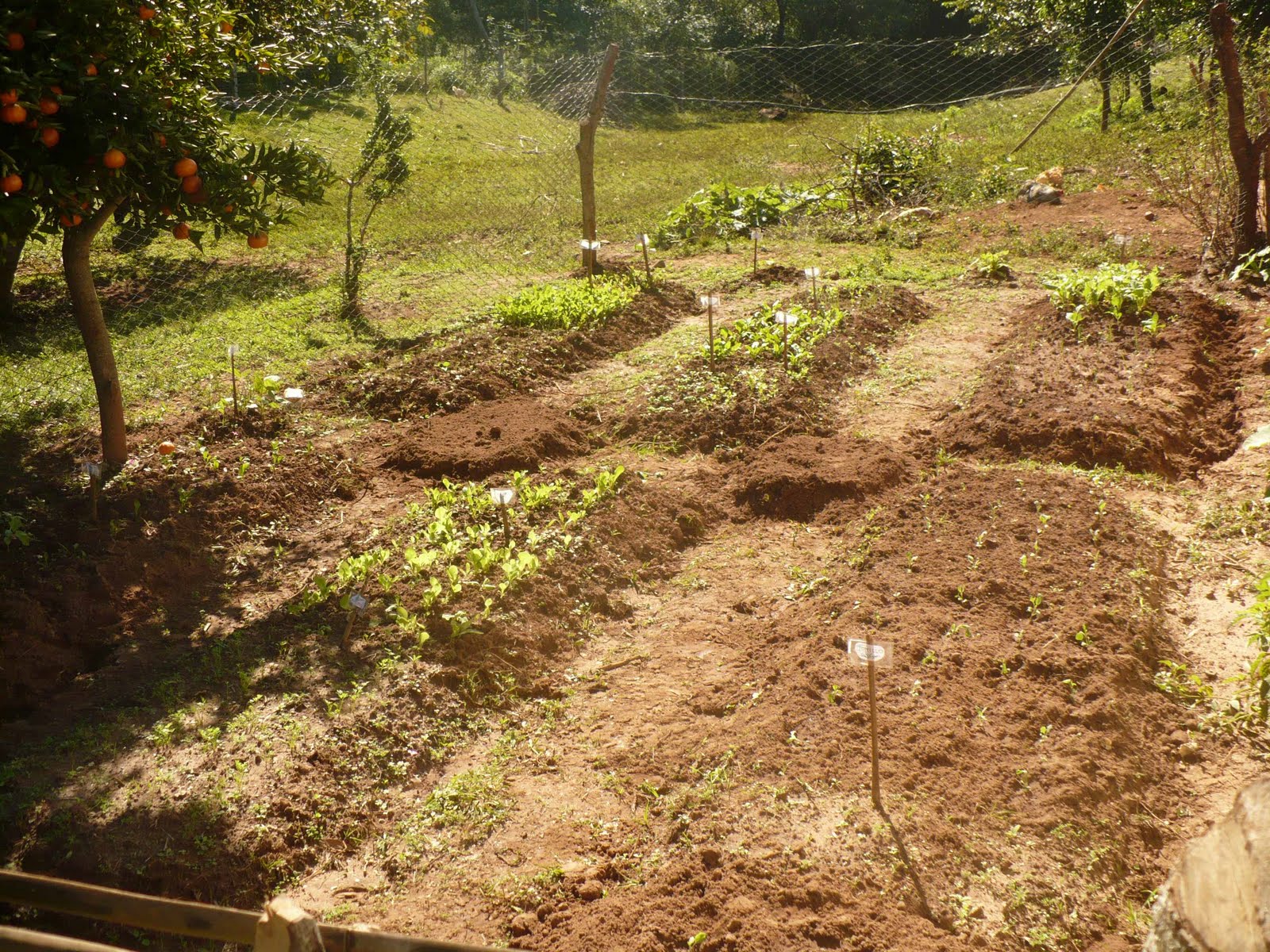 And something is working for me, because my lack of a green thumb in the states has somehow made everything in my garden here in Paraguay start to grow! Maybe at the 9-month mark, I will at least have some amazing veggies to eat.
  Tony is the most faithful and loyal dog ever. Follows me around everywhere.
 Its sugarcane season, the farmers bring it to my house to load it up in a truck.
The one thing I am really pumped about is teaching the women's committee every 15 days. Here they are making dish soap from a kit. Its a lot cheaper to make your own than to buy it in the store.

May 19, 2010
The Rain
When they made jokes about volunteers beginning to shine any wood furniture in their house with their chap-stick due to weeks of rain in training, I didn’t believe it. The rains, when they came, were indeed ample at that time, but they went as fast as they came, and we were back to the heat.
They didn’t lie. I am now on my second day of rain, after a short 3 day break from 4 straight days of rain. And when I say a day of rain, I mean it has been raining all day, pouring at times, misting at others, with plenty of lightening and thunder interspersed. Since I am in Paraguay, this also means that life as I know it shuts down. The road becomes a mud-slide slalom for only the bravest or foolish moto-driver, school closes, meetings are canceled, and the world around me becomes muddy, wet, and freezing cold. (or around 45 degrees, which, without heat, feels close to freezing.)
In a way, it’s nice. On rainy days, nothing is expected of me. If I am not careful, I expect little of myself (the clouds, the mud, the families not leaving their own homes makes it uninspiring for me to do the same). You get into a rainy day zone, although it sometimes takes me a moment to remember were the rain leaks into my house and move my chair in time to not get wet. I do crafts, I plan charlas, I now surf the internet (something I only do on rainy days since it takes so long for random pages to load when I have things to do), I bake, I talk on my cell phone an obscene amount, and I head over in my mud boots to sit around the fogon with my host mom, drink mate, and talk about the latest family gossip (today’s conversation included my host sister’s new love interest, a local 19 year old police officer from the town over). And then, I go to bed ridiculously early, after tucking Tony into his bed (he gets cold too!) only to somehow wake up late the next day.

Short times seem long. And then you realize it is. Who knows if this is a standard Paraguayan winter, they cannot even remember what it was like last year (I think its an effect of the extreme heat during the summer. And after days of thinking “well, at least the garden is happy” I just went outside to see that many of my little plants succumbed to mud flows and drowned leaves.

Luckily there’s mate, fireside chats, and many warm blankets to bide the time until the sun returns, my world dries again, and I am far too busy to remember the down, although moist, times.
 One day, between the rain, we got a little work done. Here are some kids at the school building a compost pile in front of the school garden we made!
They didn’t lie. I am now on my second day of rain, after a short 3 day break from 4 straight days of rain. And when I say a day of rain, I mean it has been raining all day, pouring at times, misting at others, with plenty of lightening and thunder interspersed. Since I am in Paraguay, this also means that life as I know it shuts down. The road becomes a mud-slide slalom for only the bravest or foolish moto-driver, school closes, meetings are canceled, and the world around me becomes muddy, wet, and freezing cold. (or around 45 degrees, which, without heat, feels close to freezing.)

In a way, it’s nice. On rainy days, nothing is expected of me. If I am not careful, I expect little of myself (the clouds, the mud, the families not leaving their own homes makes it uninspiring for me to do the same). You get into a rainy day zone, although it sometimes takes me a moment to remember were the rain leaks into my house and move my chair in time to not get wet. I do crafts, I plan charlas, I now surf the internet (something I only do on rainy days since it takes so long for random pages to load when I have things to do), I bake, I talk on my cell phone an obscene amount, and I head over in my mud boots to sit around the fogon with my host mom, drink mate, and talk about the latest family gossip (today’s conversation included my host sister’s new love interest, a local 19 year old police officer from the town over). And then, I go to bed ridiculously early, after tucking Tony into his bed (he gets cold too!) only to somehow wake up late the next day.

Short times seem long. And then you realize it is. Who knows if this is a standard Paraguayan winter, they cannot even remember what it was like last year (I think its an effect of the extreme heat during the summer. And after days of thinking “well, at least the garden is happy” I just went outside to see that many of my little plants succumbed to mud flows and drowned leaves.

Luckily there’s mate, fireside chats, and many warm blankets to bide the time until the sun returns, my world dries again, and I am far too busy to remember the down, although moist, times.
 One day, between the rain, we got a little work done. Here are some kids at the school building a compost pile in front of the school garden we made!
May 7, 2010
My Veggie Tale
In the countryside of Paraguay, where land is fairly abundant and self-production of crops is common, it makes no sense NOT to have a garden. Paraguay is pushing for family gardens: they provide cheap and abundant food, and encourage families to include more vegetables in a country where meat and corn is generally preferred. Peace Corps encourages volunteers to join in on this process, so much so that we receive two days of garden training before headed out to site. We had practice each splitting one piece of bamboo (previously cut from the stock and into smaller pieces), and attaching them together with wire. We also collectively made three tablons (or above-ground seed-beds), and planted. The simplicity of each activity meant that three months later, in site and with a piece of land for my huerta-ra (future garden), I gave myself two days to get it all ready.
The real deal was nothing like training, or it was, but about ten times more difficult. My piece of land was 3 times the size of our training garden, and it came unclean. I spent the first day chopping and removing all thick vines and root-filled plants from the land with my machete, host mom leading the way. Soon after I was hoeing away at the remaining grasses, a process that took me two days, a weeklong hiatus to wait for rain and a softer ground to continue the process, and then another afternoon. Once clean, we had to fence it off. I was fortunate enough to have chain-link fence donated to me. So it only took one full day to dig deep holes, seek out wood to serve as posts, and nail the chain-link fence to it all. Unfortunately, it didn’t fit.
Then came bamboo. I searched around my garden for the small, pre-sawed pieces provided to me in training… I found none. Off to the bamboo fields in a horse cart, where for an entire morning my sister and I searched the bamboo for mature stalks, chopped them down by machete, and then pulled and dragged them into a pile before sawing them into semi-smaller pieces and piling them back in the cart to take home.
The next 5 days were non-stop work. First I cut the bamboo into usable sizes and then split it. Then I dug and installed a place for my compost pile, abonera in Spanish. Next I installed the bamboo in the places the fence would not reach (no chickens!). Finally my brother helped me nail together a gate. I then began digging. Double digging a seed-bed is a tiring activity, one that took me two days to complete six. By that time, my hands were bruised from slamming the shovel in the ground, and I swear my forearm had new muscles. I finally spent a day hoeing and raking down the seed-beds into nice little rectangles. That night I slept for over twelve hours, recuperating the energy my work had drained from me. The next morning I planted, including putting out semi-cheesy and yet needed marking signs for where I planted what. Then I went to a training activity.
The garden, right after planting and the first water! May never look this good again.
I returned frightful, a heavy rain had come during my absence, and though I new I did my best, I doubted my ability to keep seeds from washing away in the tides from the sky. They didn’t. I have radishes already an inch tall, and the arugula is coming in thick, crowding rows with a thick green. My small planters are full of broccoli, coliflower, eggplant, pepper, and tomato seedlings. Looking at my garden I have never been so proud and intimidated simultaneously. It was the hardest physical work I have done yet here, and though it took some time, I did it. Paraguayans are impressed, and I am amazed. I realize that the battle will continue. Soon will come droughts, bugs, and unwanted weeds. But its there, its complete, and as of right now, it looks pretty dang good.
PS. The list of things planted includes: beets, thyme, lettuce (3 types), arugula, broccoli, small pumpkins, butternut squash, cucumber, onion, cabbage, eggplant, cowpeas, basil, spinach, banana peppers, garden beans, zucchini, summer squash, cilantro, parsley, carrots (2 types), radishes, jalapenos, tomatoes, peppers, and coliflower. Lets hope it all sprouts!
P.S.S. As always, any additional seeds are welcome! The seed availability in Paraguay is limited, and several of the ones already planted and doing the best came in a package from my mom (thanks!). I am especially interested in tomatillo and other hot weather seeds…

View from a bit closer.
Now More random photos!

He is getting bigger! Now double the length of my shoe.

Still a smiley puppy.

My family killed their year old huge pig one morning. It took the entire family to raise it up to be skinned. They sold only the meat, which added up to 93 Kilos (about 180 pounds) and then ate all of the bacon, skin, fat, and the head. I politely declined most of it. Just couldn't do it.
The real deal was nothing like training, or it was, but about ten times more difficult. My piece of land was 3 times the size of our training garden, and it came unclean. I spent the first day chopping and removing all thick vines and root-filled plants from the land with my machete, host mom leading the way. Soon after I was hoeing away at the remaining grasses, a process that took me two days, a weeklong hiatus to wait for rain and a softer ground to continue the process, and then another afternoon. Once clean, we had to fence it off. I was fortunate enough to have chain-link fence donated to me. So it only took one full day to dig deep holes, seek out wood to serve as posts, and nail the chain-link fence to it all. Unfortunately, it didn’t fit.
Then came bamboo. I searched around my garden for the small, pre-sawed pieces provided to me in training… I found none. Off to the bamboo fields in a horse cart, where for an entire morning my sister and I searched the bamboo for mature stalks, chopped them down by machete, and then pulled and dragged them into a pile before sawing them into semi-smaller pieces and piling them back in the cart to take home.
The next 5 days were non-stop work. First I cut the bamboo into usable sizes and then split it. Then I dug and installed a place for my compost pile, abonera in Spanish. Next I installed the bamboo in the places the fence would not reach (no chickens!). Finally my brother helped me nail together a gate. I then began digging. Double digging a seed-bed is a tiring activity, one that took me two days to complete six. By that time, my hands were bruised from slamming the shovel in the ground, and I swear my forearm had new muscles. I finally spent a day hoeing and raking down the seed-beds into nice little rectangles. That night I slept for over twelve hours, recuperating the energy my work had drained from me. The next morning I planted, including putting out semi-cheesy and yet needed marking signs for where I planted what. Then I went to a training activity.

The garden, right after planting and the first water! May never look this good again.
I returned frightful, a heavy rain had come during my absence, and though I new I did my best, I doubted my ability to keep seeds from washing away in the tides from the sky. They didn’t. I have radishes already an inch tall, and the arugula is coming in thick, crowding rows with a thick green. My small planters are full of broccoli, coliflower, eggplant, pepper, and tomato seedlings. Looking at my garden I have never been so proud and intimidated simultaneously. It was the hardest physical work I have done yet here, and though it took some time, I did it. Paraguayans are impressed, and I am amazed. I realize that the battle will continue. Soon will come droughts, bugs, and unwanted weeds. But its there, its complete, and as of right now, it looks pretty dang good.
PS. The list of things planted includes: beets, thyme, lettuce (3 types), arugula, broccoli, small pumpkins, butternut squash, cucumber, onion, cabbage, eggplant, cowpeas, basil, spinach, banana peppers, garden beans, zucchini, summer squash, cilantro, parsley, carrots (2 types), radishes, jalapenos, tomatoes, peppers, and coliflower. Lets hope it all sprouts!
P.S.S. As always, any additional seeds are welcome! The seed availability in Paraguay is limited, and several of the ones already planted and doing the best came in a package from my mom (thanks!). I am especially interested in tomatillo and other hot weather seeds…

View from a bit closer.
Now More random photos!

He is getting bigger! Now double the length of my shoe.

Still a smiley puppy.

My family killed their year old huge pig one morning. It took the entire family to raise it up to be skinned. They sold only the meat, which added up to 93 Kilos (about 180 pounds) and then ate all of the bacon, skin, fat, and the head. I politely declined most of it. Just couldn't do it.
Subscribe to:
Posts (Atom)
